

Valuations for pilates studios, reformer sites and boutique class businesses.
For studio sales, partner and instructor buy-ins, franchise resales, family law settlements, related-party transfers and CGT events. Fixed fees from $1,495 + GST, small-business reports signed and delivered in 2 business days.
A pilates studio valuation in Australia prices the recurring class book, not the reformers. Goodwill lives in the direct-debit memberships and the retention behind them, unredeemed class packs are a liability rather than revenue, and the largest single deduction is usually the founder who teaches most of the classes. Owner-operated studios commonly change hands at roughly 1.5 to 2.5 times adjusted owner earnings, with multi-site studios run under management priced higher. Oliver Group values pilates studios for sales, buy-ins, franchise resales and CGT at fixed fees from $1,495 + GST, prepared to the ATO's market valuation guidance. Oliver Group is not a registered tax agent.
When a pilates studio needs a formal valuation
Pilates has produced more new small businesses this decade than almost any other fitness category, and it is now producing the exits that follow: founders selling after the boom years, instructors buying in, franchisees moving sites on, and couples separating with a studio in the asset pool. A formal valuation is warranted whenever the figure will be tested by someone other than the person who wrote it. The usual triggers are set out below, and each of them puts a different reader in front of the report, which is why the method has to be written down rather than asserted.
- ·A sale to another operator, a physio group or a franchise network, where the price has to survive the buyer's look at the billing export
- ·An instructor, manager or partner buying in, where both sides need a figure they can test rather than argue over
- ·A franchise resale, where the franchisor's consent, transfer fee and the remaining term all sit inside the number
- ·A family law property settlement, where the court expects a single expert and the report must hold up under cross-examination
- ·Moving the studio from a sole trader or partnership into a company or trust, where the ATO's market value substitution rule applies to the transfer
- ·Claiming the small business CGT concessions on a sale, where eligibility can turn on the value of the business and the assets around it
- ·A partner or shareholder exit priced under a shareholders' agreement, and bank finance for a second site
3,823 studios, and a market that has stopped growing
IBISWorld counts 3,823 pilates and yoga studio businesses in Australia in 2026 in a market of roughly A$670 million, and the same series shows revenue flattening after several years of growth in the number of operators. That combination matters more to a valuation than any national statistic usually does. Reformer studios opened at a rate the market has not yet absorbed, and a studio that filled every class in 2023 can be sharing its catchment with three new sites by the time it is sold. A buyer prices maintainable earnings, not the best year, so the first job in a pilates studio valuation is to establish what the studio earns through a full cycle with today's competition, and to test whether recent growth came from more members, higher prices or a competitor that has since opened across the road. Low concentration cuts both ways: it means there is no dominant chain setting prices, and it means there is nothing stopping the next entrant.
The class book: memberships, packs and the deferred revenue trap
A pilates studio is a recurring-revenue business wearing a wellness brand. Its goodwill sits in the direct-debit membership book and in the retention behind it, which is why the valuation starts with the billing export and not the profit and loss. Two features make the book harder to read than a gym's. First, most studios sell a mix of unlimited memberships, capped memberships and class packs, and the packs are paid up front. Unredeemed classes are a liability the buyer inherits, and a studio that has been funding cash flow by selling ten-packs is worth less than its bank balance suggests. Second, capacity is physical: a reformer room with twelve beds and thirty classes a week can sell at most 360 places, so utilisation and price per class set the ceiling on revenue in a way a floor-based gym never faces. We reconstruct the book from the software export rather than the accounts, and we look for the following before any multiple is applied.
- ·Active members by product, and the monthly churn and average tenure behind each product
- ·Revenue split between recurring memberships, class packs and casual visits, with the unredeemed pack balance treated as deferred revenue
- ·Utilisation by class and time slot, the waitlist depth on peak classes and the empty seats on the off-peak ones
- ·Price per class actually realised after intro offers and promotions, not the rack rate
- ·Member concentration by suburb and by instructor, and what happened to attendance when an instructor left
- ·Refund, freeze and cancellation terms, and whether the direct debit contracts are enforceable
The instructor who owns it: personal goodwill in a boutique studio
Most independent studios were built by an instructor whose classes are the reason members joined and stayed. If the founder teaches twenty of the thirty weekly classes and members follow them to whichever studio they turn up at, a large share of the goodwill is personal and does not transfer with the lease and the reformers. The ATO's market valuation guidance expects a valuer to separate personal goodwill from the transferable kind rather than capitalise the lot, and a buyer prices the same risk through a handover period, a restraint and an earn-out. We test it by looking at attendance by instructor, at what happened when instructors left, and at whether the schedule can run without the owner in the room. The instructor team raises a second question. Employed instructors are covered by the Fitness Industry Award, and a studio that engages its team as contractors carries a sham-contracting and superannuation exposure that a buyer's due diligence will find and price. Either way, the cost of replacing the owner as an instructor, at award rates or better, comes off the earnings before any multiple is applied.
Reformers, fit-out and the lease: the standing deductions
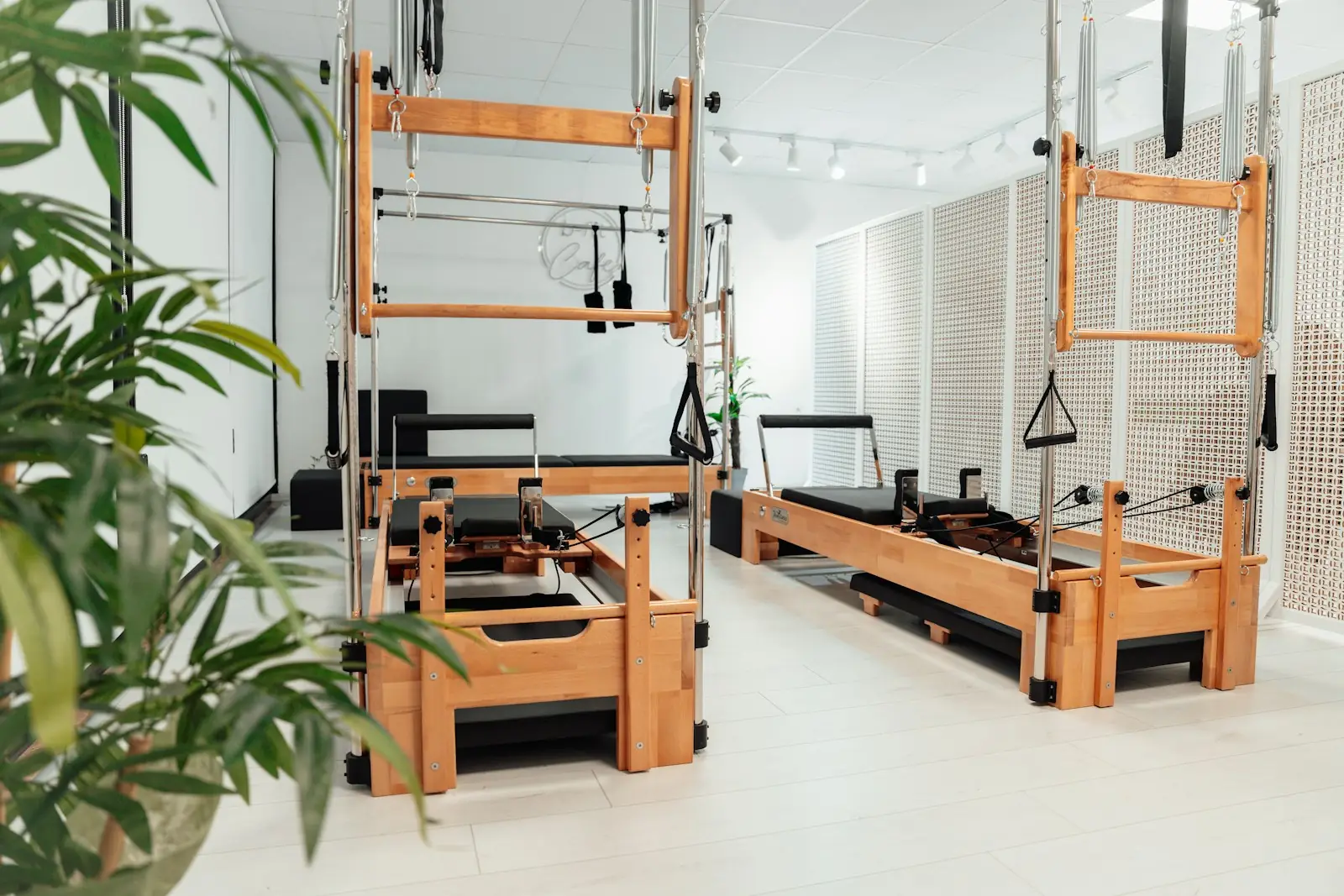
A reformer studio is fit-out heavy. Commercial reformers cost several thousand dollars each, a twelve-bed room is a six-figure outlay with flooring, mirrors and change rooms, and much of it is on equipment finance or a landlord contribution with strings attached. The valuation has to know who owns what, what is still owed and when the beds will need replacing, because the capex cycle is a real deduction from the cash a buyer will actually keep. The lease is the other half. Studios live or die on location and on a lease long enough to justify the fit-out, so the term remaining, the options, the assignment clause and the make-good obligation all move the number. A studio with eighteen months left and a landlord who has not agreed to an assignment is not worth what its earnings suggest, and the report says so. Rent as a share of revenue is the quickest health check: boutique fitness tenancies in metropolitan strips run high, and a studio paying a related-party landlord below market has to be restated to market before it is valued.
Franchise or independent, and where clinical pilates sits
Franchised reformer systems such as KX Pilates, Studio Pilates and Club Pilates have driven much of the category's growth, and a franchised studio is valued as a franchise first. The remaining term, the renewal conditions, the territory, the royalties and marketing levies, the franchisor's consent to a transfer and any transfer fee all sit inside the number, and a resale that the franchisor can veto is a different asset from one it has already approved. Independent studios trade on the transferability of their own brand and their own class book, with no royalty deduction but no system behind them either. Clinical pilates is a third case. Since 1 April 2019, private health insurers have not paid extras benefits for pilates as such, and only physiotherapists and exercise physiologists can deliver exercise drawn from pilates within a rebatable consultation. A studio inside a physiotherapy practice is therefore valued as an allied health business, with practitioner dependence and the rebate rules in view, rather than as a fitness studio. If your business straddles both, we value the two streams on their own footing.
Which Oliver Group engagement fits a pilates studio
Oliver Group's fees are set by the annual turnover of the business: a Small Business Valuation is $1,495 + GST for turnover under $2 million, a Medium Business Valuation is $2,495 + GST for turnover between $2 million and $3 million, a Large Business Valuation is $3,495 + GST for turnover between $3 million and $10 million, and above $10 million the fee is quoted in writing before work starts. Small-business reports are delivered in 2 business days and medium- and large-business reports in 3 business days; above $10 million the delivery date is agreed before commencement. Delivery time starts once payment and all required information have been received. Retrospective valuation dates are +$495 each and additional entities are +$795 each. The fee is fixed in writing before work begins and never depends on the concluded value.
Common questions.
How much is a pilates studio worth in Australia?+
Owner-operated studios commonly change hands at roughly 1.5 to 2.5 times adjusted owner earnings, which is the profit after every expense plus the owner's own remuneration added back. A studio with a strong recurring membership book, a stable instructor team and a long lease sits at the top of that range; one that depends on the founder teaching most classes, or on selling class packs to fund cash flow, sits at the bottom or below it. Multi-site studios run under management are priced on normalised earnings and trade higher.
Is a pilates studio valued on EBITDA or on owner earnings?+
Small owner-operated studios are usually quoted on seller's discretionary earnings, which adds the working owner's full remuneration back to profit. Larger studios run under management are valued on normalised EBITDA after a market salary is charged for the owner's role. The two bases give different earnings figures and attract different multiples, and mixing them is the most common way a pilates studio ends up mispriced. Our reports state the basis and show the normalisation line by line.
Do unredeemed class packs affect the value?+
Yes. Prepaid classes that members have not yet used are a liability the buyer takes on, so the outstanding pack balance comes off the price or is settled at completion. A studio that has relied on pack sales for cash flow can show a healthy bank balance and a weak business at the same time. We reconstruct the balance from the booking software rather than from the accounts.
How is a franchised pilates studio valued for resale?+
As a franchise first. The remaining term and renewal rights, the territory, royalties and levies, the franchisor's consent to the transfer and any transfer fee all sit inside the number, and the buyer will price the system's conditions as well as the studio's earnings. We read the franchise agreement before we read the profit and loss, and the report sets out what the franchisor's terms do to the value.
Can you act as the single expert valuer for a pilates studio in a family law matter?+
Yes. We accept joint appointments under the Family Law Rules 2021, share every communication with both sides at the same time and prepare the report to withstand cross-examination. Instructor dependence and personal goodwill are usually the decisive questions in a studio settlement, and the report addresses them directly. If one party needs a private adviser to review the other side's report instead, we do that too.
Do you need to visit the studio?+
Usually not. The valuation runs on the billing export, the financial statements, the lease, any franchise agreement and a call with the owner, and engagements are managed remotely across Australia. Where the reformers and fit-out are a large part of the value, or a site inspection would change the answer, we say so at scoping.
- ·Pilates & Yoga Studios in Australia: number of businesses (2026), IBISWorld
- ·Pilates & Yoga Studios in Australia: market size (2026), IBISWorld
- ·Fitness Industry Award summary (MA000094), Fair Work Ombudsman
- ·Natural Therapies Review (private health insurance cover for natural therapies), Department of Health, Disability and Ageing
- ·Small business CGT concessions, Australian Taxation Office
- ·Market valuation of assets, Australian Taxation Office
Talk to a valuer
Tell us what you need valued.
A fifteen-minute call confirms the package, the fixed fee and the delivery date, before you commit to anything.
03 8375 4177Mon to Fri, 9am to 5:30pm Melbourne time
Send the form and we reply within one business day. No documents needed to start.
Small Business Valuation
$1,495 + GST
For a business with annual turnover under $2 million. Signed report in 2 business days. Delivery time starts once payment and all required information have been received. The fee is fixed in writing before we start and never tied to the outcome.
Larger business? Tell us in the form and we recommend the right package. All fees